 Free Transportation
Pediatric Dentist vs Family Dentist: What's the Difference?
Pediatric dentist vs family dentist: discover the key differences, benefits, and how to choose the right dentist for your child's healthy smile.
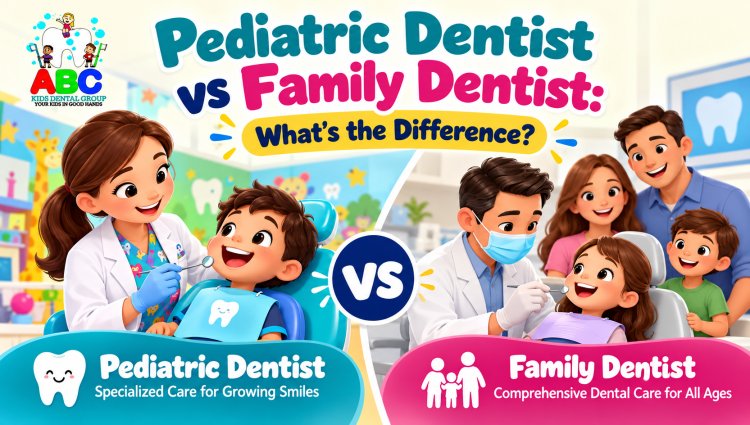
Choosing the right dentist for your child is an important step toward building healthy dental habits that last a lifetime. But with so many options available, parents often ask: What's the difference between a pediatric dentist and a family dentist, and which one is best for my child?
Both types of dentists can help children maintain healthy teeth and gums. However, their training, focus, and approach to treating young patients can differ.
Understanding these differences can help you make a confident decision based on your child's age, dental needs, comfort level, and your family's preferences.
At ABC Kids Dental Group, we believe that informed parents can make better decisions about their children's oral health. Let's explore how pediatric and family dentists compare.
What Is a Pediatric Dentist?
A pediatric dentist specializes in the oral health of infants, children, teenagers, and certain patients with special healthcare needs.
After completing dental school, pediatric dentists receive additional specialized training in children's dental development, behavior management, preventive care, and treatment of childhood dental conditions.
Their focus is on helping young patients feel comfortable while protecting their developing smiles.
What Services Does a Pediatric Dentist Provide?
Pediatric dentists offer services designed around children's changing dental needs, including:
-
Routine dental examinations and professional cleanings
-
Fluoride treatments and dental sealants
-
Cavity diagnosis and treatment
-
Monitoring baby teeth and permanent tooth development
-
Space maintainers when baby teeth are lost prematurely
-
Evaluations for developing bite and alignment problems
-
Dental care for children who experience anxiety or need additional support
You can explore the pediatric dental services offered by ABC Kids Dental Group to learn more about available treatments.
Why Do Some Parents Prefer Pediatric Dentists?
Pediatric dental practices are designed to accommodate children. From age-appropriate communication to child-friendly surroundings, the goal is to make dental appointments feel less intimidating.
Pediatric dentists also understand common childhood concerns, such as teething, thumb-sucking, dental fear, and the transition from baby teeth to permanent teeth.
This specialized experience can be especially helpful for babies, toddlers, nervous children, and young patients who need more involved dental treatment.
What Is a Family Dentist?
A family dentist provides dental care for patients across different age groups, often including children, teenagers, adults, and older adults.
Family dentists typically offer general dental services that help individuals and families maintain their oral health throughout life.
Unlike pediatric dentists, family dentists do not necessarily complete additional specialty training in pediatric dentistry. However, many have experience treating children and can provide excellent care for young patients.
What Services Does a Family Dentist Provide?
Depending on the practice, family dental services may include:
-
Routine dental examinations and cleanings
-
Cavity prevention and fillings
-
Gum health assessments
-
Dental X-rays when clinically necessary
-
Treatment planning for common dental problems
-
Preventive guidance for patients of different ages
Some family dentists also provide selected cosmetic or restorative treatments.
Why Do Families Choose Family Dentists?
One major advantage is convenience. Parents and children may be able to schedule their dental appointments at the same office, making it easier to coordinate visits.
A family dentist can also help maintain continuity of care as children grow, provided the practice offers the services they need.
However, parents should confirm that the dentist regularly treats children and is comfortable managing their child's specific dental concerns.
Pediatric Dentist vs Family Dentist: Key Differences
Although both can support children's oral health, there are several important differences to consider.
1. Education and Specialized Training
Pediatric dentists complete additional specialty training focused on children's oral health and development.
Family dentists generally provide comprehensive dental care across age groups, and their experience with children varies by practice.
What this means for parents: If your child has complex dental needs, significant anxiety, or developmental concerns, a pediatric dentist's specialized training may be particularly beneficial.
2. Age Groups Treated
Pediatric dentists focus on infants, children, and teenagers, while family dentists commonly treat patients of all ages.
What this means for parents: A pediatric dentist offers a child-focused approach, while a family dentist may be convenient when everyone in the household wants to receive care in one place.
3. Office Environment
Pediatric dental offices often feature child-friendly decor, smaller equipment when appropriate, and communication techniques designed for young patients.
Family dental offices may serve a broader patient population, although many also create welcoming environments for children.
What this means for parents: Consider how comfortable your child feels in the office, particularly if they are visiting a dentist for the first time.
4. Managing Dental Anxiety
Pediatric dentists receive specialized training in behavior guidance for children, including techniques to explain procedures and build trust.
Family dentists may also have considerable experience helping nervous children feel comfortable.
What this means for parents: If your child is fearful or has difficulty cooperating during dental visits, ask about the dentist's experience and available comfort options.
5. Preventive Care and Growing Smiles
Both types of dentists can provide preventive care when appropriately trained and equipped. Pediatric dentists have a particular focus on childhood dental development, including baby teeth, eruption patterns, and developing bites.
What this means for parents: Choose a dentist who can monitor your child's development and explain how to protect their teeth at every stage.
When Should You Choose a Pediatric Dentist?
A pediatric dentist may be the right choice if:
-
Your child is an infant or toddler having their first dental visit.
-
Your child experiences dental anxiety or fear.
-
Your child has frequent cavities or a higher risk of tooth decay.
-
Your child needs specialized guidance during dental treatment.
-
You have questions about baby teeth, permanent teeth, or developing bite problems.
-
Your child has additional healthcare needs that affect dental care.
The American Academy of Pediatric Dentistry recommends that children visit a dentist when their first tooth appears, and no later than their first birthday.
Read our guide to your child's first dental visit to learn what parents can expect.
When Is a Family Dentist a Good Option?
A family dentist may be suitable when your child has routine dental needs and the practice has experience treating children.
This option may work well if you prefer coordinating family appointments or your child already feels comfortable with a trusted dentist.
Before scheduling, ask whether the practice treats children of your child's age, provides preventive pediatric services, and can manage common childhood dental concerns.
If a problem requires specialized treatment, your family dentist may recommend a pediatric dentist or another dental specialist.
How to Choose the Right Dentist for Your Child
The best choice depends on your child's individual needs rather than the practice's title alone.
Consider these five factors before making your decision:
-
Experience with children: Ask about the dentist's training and experience treating patients of your child's age.
-
Comfort and communication: Look for a team that explains procedures in a reassuring, age-appropriate way.
-
Preventive services: Confirm that examinations, cleanings, fluoride treatments, and sealants are available when appropriate.
-
Convenience: Consider office location, appointment availability, insurance participation, and accessibility.
-
Your child's needs: Discuss dental anxiety, previous treatment experiences, medical conditions, or ongoing dental problems.
Regular dental visits help identify potential concerns early and reinforce healthy habits at home.
You can also read about oral examinations for children and learn more about ABC Kids Dental Group.
Frequently Asked Questions (FAQs)
1. Is a pediatric dentist better than a family dentist for children?
Not necessarily in every situation. Both can provide quality dental care for children. Pediatric dentists have additional specialty training focused on children's oral health, making them particularly helpful for young children and those with more complex needs.
2. At what age should my child see a pediatric dentist?
Your child should visit a dentist when the first tooth appears or by their first birthday, whichever comes first. Early appointments help establish preventive care and healthy dental habits.
3. Can a family dentist treat cavities in children?
Yes. Many family dentists diagnose and treat childhood cavities. However, the appropriate treatment depends on the child's age, the condition of the tooth, and the dentist's experience and available services.
4. Do pediatric dentists treat teenagers?
Yes. Pediatric dentists generally care for children and adolescents, often through the teenage years. Ask the individual practice about its age range and transition recommendations.
5. How often should children visit the dentist?
Many children benefit from checkups approximately every six months. Your dentist may recommend more frequent visits depending on your child's oral health, cavity risk, and treatment needs.
Final Thoughts: Which Dentist Is Right for Your Child?
When comparing a pediatric dentist vs a family dentist, remember that both can play an important role in maintaining healthy smiles.
A family dentist may offer convenient dental care for the entire household, while a pediatric dentist provides additional specialty training focused on children's unique dental needs.
Consider your child's age, comfort level, oral health, and the services available before deciding. Most importantly, establish regular dental visits early and follow your dentist's recommendations.
At ABC Kids Dental Group, we are committed to helping children develop healthy smiles in a welcoming, supportive environment.
Ready to take the next step? Visit ABC Kids Dental Group to learn more or request an appointment.
Contact ABC Kids Dental Group
Website: https://www.abckidsdentalla.com/
Main phone: 833-422-2543
Office locations and phone numbers:
-
Granada Hills: 16850 San Fernando Mission Blvd., Granada Hills, CA 91344 | 818-488-6068
-
Pacoima: 10445 Laurel Canyon Blvd., Pacoima, CA 91331 | 818-890-8070
-
Sun Valley: 8361 Laurel Canyon Blvd., Sun Valley, CA 91352 | 818-504-9216
-
San Fernando: 2040 Glenoaks Blvd., Unit F, San Fernando, CA 91340 | 818-600-4690
-
Reseda: 18235 Sherman Way, Reseda, CA 91335 | 818-401-6777
ABC Kids Dental Group — Your Kids in Good Hands!
What's Your Reaction?