 Free Transportation
Child's Tooth Turning Gray: Causes, Treatment & When to Worry
Is your child's tooth turning gray? Learn common causes, dental injury warning signs, treatment options, and when to visit a pediatric dentist.
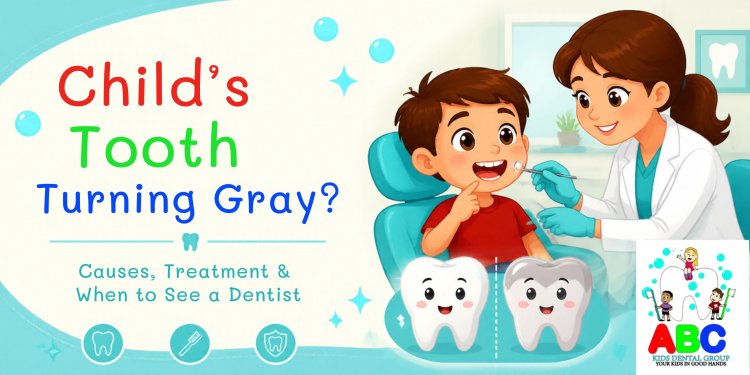
Have you noticed that one of your child's teeth is turning gray or looking darker than the surrounding teeth? It can be worrying for parents, especially when the change happens suddenly. You may wonder whether it is a cavity, an injury, or a sign that something is wrong inside the tooth.
A gray tooth in a child can develop for several reasons. Sometimes, it follows an accidental fall or a bump to the mouth. In other cases, tooth decay, changes inside the tooth, or developmental conditions may be responsible. Although discoloration does not always mean a tooth needs to be removed, it should never be ignored.
At ABC Kids Dental LA, we encourage parents to seek professional dental advice whenever they notice an unexplained change in their child's teeth. Understanding the possible causes and treatment options can help you make informed decisions about your child's oral health.
Why Is My Child's Tooth Turning Gray?
A child's tooth may turn gray when the tissue inside the tooth changes following an injury or when other dental conditions affect its color. The appearance alone cannot confirm the cause, so a dental examination is important.
1. Dental Trauma or an Accidental Injury
Dental injuries are a common reason for a child's tooth to change color. Children may bump their mouths while playing sports, running, falling, or participating in everyday activities.
Even when a tooth looks intact, an impact can affect the blood supply inside it. Over time, the tooth may develop a pink, brown, or gray appearance.
Discoloration may appear immediately or develop gradually over days or weeks. Sometimes, the tooth remains healthy, while in other cases, the internal pulp tissue becomes damaged.
What parents should do: Arrange a dental examination after an injury, particularly if the tooth changes color, becomes loose, or causes discomfort. A dentist can assess the tooth and recommend monitoring or treatment as needed.
2. Tooth Pulp Damage or Infection
The pulp is the soft tissue inside a tooth containing nerves and blood vessels. Significant trauma, deep tooth decay, or infection can damage this tissue and sometimes cause a tooth to turn gray.
A gray tooth does not automatically mean the pulp is dead or infected. However, persistent discoloration may indicate changes that require further investigation.
Watch for additional symptoms, including tooth pain, gum swelling, a small pimple-like bump on the gums, tenderness, or unusual sensitivity.
A pediatric dentist may examine the tooth and use dental X-rays when appropriate to evaluate its condition. Treatment depends on whether the pulp remains healthy and whether infection is present.
3. Tooth Decay and Untreated Cavities
Tooth decay can change a child's tooth color. Early cavities may appear white or brown, while more advanced decay can cause darker areas or visible damage.
Gray discoloration is not the most typical early sign of a cavity, so parents should avoid assuming that every gray tooth is caused by tooth decay.
If you notice dark spots, holes, food collecting in a tooth, or sensitivity while eating, arrange a dental visit.
Learn more about tooth decay in children and its early warning signs.
4. Natural Development and Enamel Differences
Sometimes, a tooth may look different because of variations in enamel formation or the way the tooth developed.
Developmental enamel conditions can cause teeth to appear unusually colored, spotted, or less uniform than neighboring teeth. Certain medications taken during tooth development can also affect tooth color, depending on the medication and timing.
If several teeth appear discolored, or if the change has been present since the teeth erupted, tell your dentist when you first noticed it.
A professional examination can help distinguish developmental discoloration from injury or decay.
5. Why Baby Teeth and Permanent Teeth May Look Different
Gray discoloration can occur in both baby teeth and permanent teeth. However, the treatment approach may differ because baby teeth have a limited lifespan, while permanent teeth are intended to last for many years.
A gray baby tooth may sometimes be monitored if it is comfortable and shows no signs of infection. Other cases may require treatment to protect your child's oral health.
Permanent teeth deserve careful evaluation because preserving their health and function is important for long-term oral development.
What Are the Treatment Options for a Gray Tooth?
There is no single treatment for every gray tooth. Your pediatric dentist will consider the child's age, whether the affected tooth is a baby or permanent tooth, the history of injury, and any symptoms.
1. Dental Examination and Monitoring
If a tooth has changed color after an injury but has no signs requiring immediate treatment, the dentist may recommend monitoring it over time.
Follow-up visits help assess changes in color, tooth stability, symptoms, and the surrounding gums. A dentist may recommend X-rays or other appropriate tests depending on the situation.
Monitoring should always follow professional advice rather than replacing an initial examination.
2. Treatment for Cavities
If tooth decay is responsible for the discoloration, treatment depends on how far the decay has progressed.
Options may include preventive fluoride treatment for suitable early lesions, a filling for a cavity, or a crown when more extensive damage requires additional protection.
Read our guide to dental fillings for children to understand how dentists repair damaged teeth.
3. Pulp Therapy for an Injured or Infected Tooth
When the pulp inside a tooth is damaged or infected, the dentist may recommend pulp therapy if the tooth can be preserved.
The specific procedure depends on the condition of the tooth and whether it is a baby or permanent tooth. In certain cases, removal may be necessary if the tooth cannot be restored or the infection cannot be managed appropriately.
Your dentist will explain the available options and the reasons for recommending a particular treatment.
4. Tooth Removal When Necessary
Extraction is not automatically required just because a tooth turns gray. However, it may be appropriate when a tooth is severely damaged, cannot be restored, or presents an infection risk that cannot be managed with other treatments.
For baby teeth, the dentist will also consider the child's development and whether the early loss of the tooth could affect spacing or require additional care.
5. Cosmetic Treatment for Lasting Discoloration
If the tooth is healthy but remains discolored, cosmetic options may sometimes be considered after the underlying cause has been evaluated.
The best approach depends on the child's age, tooth type, and dental health. Whitening products should not be used on children without professional guidance, and cosmetic treatment should never replace necessary care for an injured or infected tooth.
What Can Parents Do at Home?
While waiting for a dental appointment, you can take a few simple steps to support your child's comfort.
-
Encourage gentle brushing twice daily with fluoride toothpaste appropriate for your child's age.
-
Offer soft foods if chewing causes discomfort.
-
Avoid repeatedly pressing or wiggling the affected tooth.
-
If swelling occurs after an injury, apply a cold compress to the outside of the cheek.
-
Do not apply aspirin, whitening products, or household remedies directly to the tooth or gums.
-
Keep track of when the discoloration began and whether pain, swelling, or looseness develops.
Seek urgent dental care for a gray tooth accompanied by significant pain, swelling, pus, or fever. Facial swelling with difficulty breathing or swallowing requires emergency medical attention.
For additional guidance, read our parent's guide to what to do when a child has a toothache.
When Should You Visit a Pediatric Dentist?
Do not wait for pain to appear before seeking advice about a newly gray tooth. Some dental problems can develop without obvious discomfort.
Schedule an examination as soon as reasonably possible if you notice unexplained discoloration, particularly after a fall or impact. A dentist can determine whether the tooth needs monitoring, restorative treatment, or further investigation.
ABC Kids Dental LA offers child-focused dental services, including examinations, digital X-rays when indicated, fillings, crowns, and pulp therapy. Visit our pediatric dental services page to learn more.
Families looking for a pediatric dentist Granada Hills, pediatric dentist Pacoima, or pediatric dentist Sun Valley CA can contact our team to discuss their child's needs.
We also welcome families searching for a pediatric dentist Reseda, children's dentist San Fernando CA, or pediatric dentist near Mission Hills. Parents looking for a kids orthodontist Granada Hills, braces for kids Pacoima, children's dentist North Hills CA, or kids dentist near Hansen Dam can ask our team about available orthodontic services and local appointment options.
Frequently Asked Questions
1. Can a child's gray tooth turn white again?
Sometimes, tooth color may change over time, but this cannot be guaranteed. The outcome depends on the cause of discoloration and the condition of the tooth. A dentist should evaluate unexplained gray discoloration before deciding whether monitoring or treatment is appropriate.
2. Does a gray baby tooth always need to be removed?
No. Some gray baby teeth can remain in place and be monitored, while others need treatment because of infection or damage. The dentist will consider symptoms, examination findings, and the child's development before recommending extraction.
3. Can a tooth turn gray weeks after an injury?
Yes. Discoloration can develop gradually after dental trauma, even when the original injury seemed minor. Arrange a dental examination if a tooth changes color after a fall or impact.
4. Is a gray permanent tooth more serious than a gray baby tooth?
A gray permanent tooth needs prompt evaluation because it is intended to last throughout adulthood. However, both baby and permanent teeth can develop significant problems, so neither should be ignored.
5. Should I use teeth-whitening products on my child's gray tooth?
No. Do not use whitening products without professional guidance. Discoloration may be related to internal tooth damage or infection, and the underlying cause should be assessed before cosmetic treatment is considered.
Help Protect Your Child's Healthy Smile
A child's tooth turning gray can be concerning, but early evaluation can help identify the cause and guide the right treatment. Whether the discoloration follows an injury, develops gradually, or appears alongside other symptoms, a pediatric dental examination is the safest next step.
ABC Kids Dental LA is committed to helping children and families understand their dental health and explore appropriate care options.
Contact ABC Kids Dental LA to schedule your child's dental evaluation.
ABC Kids Dental LA — Children's Dentistry & Orthodontics
Main phone: 833-422-2543
Office locations and phone numbers:
-
Granada Hills: 16850 San Fernando Mission Blvd., Granada Hills, CA 91344 | 818-488-6068
-
Pacoima: 10445 Laurel Canyon Blvd., Pacoima, CA 91331 | 818-890-8070
-
Sun Valley: 8361 Laurel Canyon Blvd., Sun Valley, CA 91352 | 818-504-9216
-
San Fernando: 2040 Glenoaks Blvd., Unit F, San Fernando, CA 91340 | 818-600-4690
-
Reseda: 18235 Sherman Way, Reseda, CA 91335 | 818-401-6777
Website: https://abckidsdentalla.com/
Disclaimer: This article is for general educational purposes and is not a substitute for professional dental advice, diagnosis, or treatment. Consult a qualified dental professional about your child's specific symptoms.
What's Your Reaction?