 Free Transportation
What Parents Often Miss About Their Child’s First Permanent Teeth
Learn what parents often miss about children's first permanent teeth, including eruption, cavities, alignment, dental sealants, and preventive care.
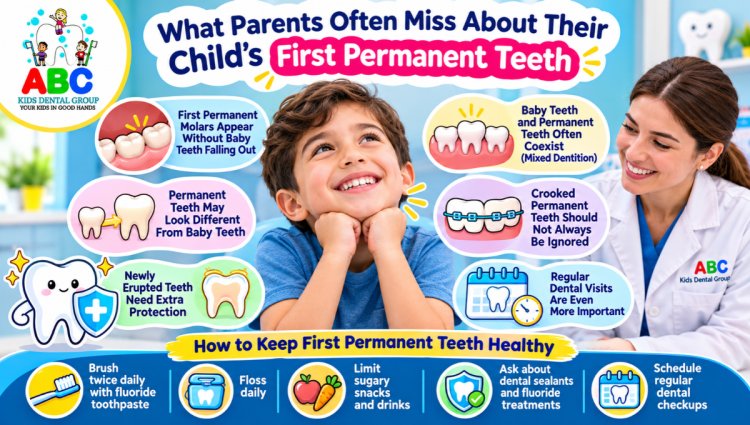
Watching your child's first baby tooth fall out is an exciting milestone. But what many parents don't realize is that the arrival of permanent teeth brings new dental responsibilities. Unlike baby teeth, permanent teeth are designed to last a lifetime, making their early care especially important.
Many parents focus on brushing, flossing, and preventing cavities, but some important details about permanent teeth often go unnoticed. From the first permanent molars appearing behind baby teeth to changes in tooth alignment, these developments can affect your child's long-term oral health.
At ABC Kids Dental Group, we believe that informed parents can make a big difference in protecting their children's smiles. Let's explore what parents often miss about their child's first permanent teeth and how you can help keep them healthy.
1. First Permanent Molars Appear Without Baby Teeth Falling Out
One of the biggest surprises for parents is that the first permanent molars usually appear around age six without replacing any baby teeth.
These teeth erupt behind the existing baby molars, which means parents may mistake them for ordinary baby teeth. Because they appear so far back in the mouth, they can also be difficult to clean properly.
Why these teeth matter:
-
They help establish the foundation of your child's permanent bite.
-
They play an important role in chewing food.
-
Their deep grooves can trap food particles and plaque.
-
They are vulnerable to cavities if proper cleaning is overlooked.
Parent tip: Check the area behind your child's last baby molars regularly. Ask your dentist whether dental sealants can help protect these newly erupted permanent molars.
2. Permanent Teeth May Look Different From Baby Teeth
Parents sometimes worry when their child's new permanent teeth look larger, slightly yellow, or uneven compared with their baby teeth.
In many cases, these differences are completely normal.
Permanent teeth are naturally larger than primary teeth and may have a more yellowish appearance because their underlying dentin is thicker. Newly erupted permanent front teeth may also have small natural ridges along their biting edges, called mamelons.
As your child grows, these ridges usually wear down naturally through everyday chewing.
When should parents be concerned?
Consult a pediatric dentist if you notice:
-
Unusual spots or discoloration.
-
Chipped or damaged enamel.
-
Persistent tooth sensitivity.
-
Teeth erupting in an unexpected position.
-
Pain or swelling around a newly erupted tooth.
A professional examination can help determine whether these changes are part of normal development or require attention.
3. Newly Erupted Permanent Teeth Need Extra Protection
One detail parents often overlook is that newly erupted permanent teeth may be more vulnerable to cavities.
When a permanent tooth first appears, its enamel is still undergoing post-eruptive maturation. The deep grooves and pits on newly erupted molars can also make cleaning difficult.
This is why preventive dental care is especially important during this stage.
Ways to protect new permanent teeth include:
-
Brush twice daily using fluoride toothpaste.
-
Floss between teeth that touch.
-
Limit frequent sugary snacks and drinks.
-
Drink plenty of water.
-
Ask your dentist about professional fluoride treatments.
-
Discuss dental sealants for permanent molars.
Dental sealants create a protective coating over the chewing surfaces of back teeth, helping prevent food and bacteria from settling into deep grooves.
4. Baby Teeth and Permanent Teeth Often Coexist
Another important stage parents should understand is called mixed dentition.
Mixed dentition occurs when children have both baby teeth and permanent teeth in their mouths. This phase commonly begins around age six and continues until approximately age 12 or 13.
During this period, parents may notice:
-
Baby teeth becoming loose.
-
Permanent teeth appearing behind or beside baby teeth.
-
Temporary gaps between front teeth.
-
Changes in how the upper and lower teeth fit together.
Some of these changes are normal parts of dental development. However, persistent crowding, unusual bite patterns, or baby teeth that remain in place while permanent teeth erupt may need professional evaluation.
Regular dental checkups help monitor these changes and identify concerns early.
5. Crooked Permanent Teeth Should Not Always Be Ignored
When permanent teeth begin appearing, parents may notice overlapping, crowding, gaps, or uneven alignment.
Not every crooked tooth requires immediate braces, but these changes should not be ignored.
A pediatric dentist can evaluate your child's jaw development, tooth spacing, bite, and eruption patterns. If necessary, an orthodontic evaluation can help determine whether early treatment may be beneficial.
The American Association of Orthodontists recommends an initial orthodontic checkup by age seven. This does not mean every child needs braces at that age. It simply allows potential developmental concerns to be identified.
If you are considering a kids orthodontist in Granada Hills or braces for kids in Pacoima, an early professional assessment can help you understand your child's orthodontic needs and treatment options.
6. Brushing Permanent Teeth Requires More Attention
Children may feel independent when brushing their teeth, but they do not always have the coordination needed to clean every surface effectively.
Permanent molars are especially easy to miss because they sit at the back of the mouth.
Parents should continue supervising brushing until children can consistently clean their teeth properly.
Build these habits into your child's routine:
-
Brush for two minutes, twice daily.
-
Use an age-appropriate amount of fluoride toothpaste.
-
Pay special attention to newly erupted back teeth.
-
Floss once daily when teeth touch.
-
Replace toothbrushes when bristles become worn.
-
Make brushing a consistent family activity.
You can also explore our guide on building healthy dental habits for children.
7. Regular Dental Visits Become Even More Important
Some parents believe that once permanent teeth appear, dental visits are only necessary when a problem develops. This is a common misconception.
Regular dental appointments help monitor permanent tooth eruption, identify early cavities, evaluate bite development, and recommend preventive treatments.
Most children benefit from dental checkups approximately every six months, although the ideal schedule depends on their individual oral health needs.
During these visits, your dentist may:
-
Examine newly erupted permanent teeth.
-
Check for cavities and enamel concerns.
-
Evaluate tooth alignment and bite development.
-
Recommend fluoride treatments or sealants.
-
Provide age-appropriate brushing and flossing guidance.
Read more about how pediatric dentistry supports lifelong oral health.
Frequently Asked Questions About Children's First Permanent Teeth
1. At what age do children get their first permanent teeth?
Most children begin getting their first permanent teeth around age six. The first molars and lower front teeth are commonly among the earliest to appear, although timing varies from child to child.
2. Do the first permanent molars replace baby teeth?
No. The first permanent molars usually erupt behind the existing baby molars. They do not replace any baby teeth, which is why parents may not realize they have appeared.
3. Why do my child's permanent teeth look yellow compared with baby teeth?
Permanent teeth naturally tend to look slightly more yellow because their dentin layer is thicker. However, unusual discoloration or spots should be examined by a dentist.
4. Should children get dental sealants on permanent teeth?
Dental sealants are commonly recommended for cavity-prone chewing surfaces, particularly permanent molars. Your dentist can assess whether they are appropriate for your child's teeth.
5. When should my child have their first orthodontic evaluation?
An initial orthodontic evaluation is generally recommended by age seven. This allows an orthodontist to assess jaw growth, tooth eruption, and bite development. Early evaluation does not necessarily mean your child needs braces.
Protect Your Child's Growing Smile With ABC Kids Dental Group
Your child's first permanent teeth are an important milestone, and protecting them early can make a lasting difference. Understanding tooth eruption, recognizing unusual changes, maintaining proper brushing habits, and scheduling regular dental visits can help support a healthy smile for years to come.
At ABC Kids Dental Group, we are committed to helping children develop healthy smiles through preventive dental care, regular examinations, and personalized guidance for parents.
Whether you are searching for a pediatric dentist in Granada Hills, pediatric dentist Pacoima, pediatric dentist Sun Valley CA, or pediatric dentist Reseda, our team welcomes families across the San Fernando Valley.
We also serve families looking for a children's dentist in San Fernando CA, kids orthodontist Granada Hills, braces for kids Pacoima, pediatric dentist near Mission Hills, children's dentist North Hills CA, or kids dentist near Hansen Dam.
Explore our office locations and request your child's appointment today.
Contact ABC Kids Dental Group
Website: https://www.abckidsdentalla.com/
Main Appointment Number: 833-422-2543
Office Contact Numbers:
-
Granada Hills: 818-488-6068
-
Pacoima: 818-890-8070
-
Sun Valley: 818-504-9216
-
San Fernando: 818-600-4690
-
Reseda: 818-401-6777
We accept Denti-Cal and PPO insurance plans. Se habla español.
Give your child's permanent teeth the care they deserve. Schedule a dental checkup with ABC Kids Dental Group and help build a foundation for a lifetime of healthy smiles!
What's Your Reaction?