 Free Transportation
What to Do When Your Child Chips, Cracks, or Knocks Out a Tooth
Learn what to do when your child chips, cracks, or knocks out a tooth. Discover emergency first aid, treatment options, and pediatric dental care tips.
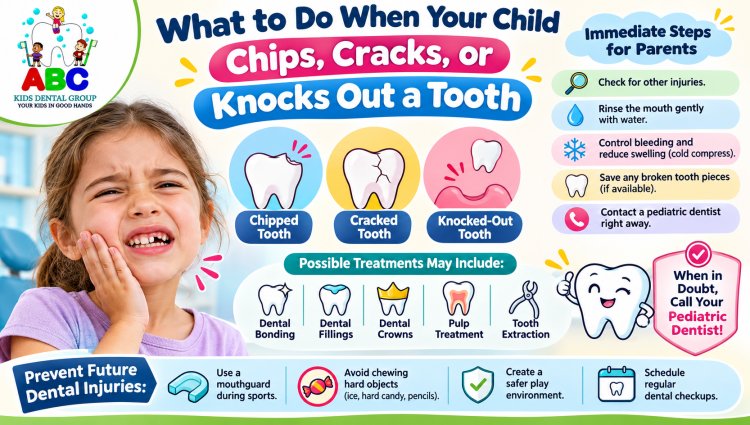
Dental accidents can happen anytime—during playground activities, sports, school, or even while eating. One moment your child is happily playing, and the next, you're dealing with a chipped, cracked, or completely knocked-out tooth. As a parent, it's natural to feel worried, but knowing what to do can make a significant difference in protecting your child's smile.
Whether your child has a minor tooth chip or a serious dental injury, taking the right steps immediately can help prevent complications and improve the chances of saving the affected tooth.
At ABC Kids Dental Group, we understand that dental emergencies can be stressful for children and parents. This guide explains how to recognize different types of dental injuries, provide immediate first aid, and understand when to seek professional pediatric dental care.
1. Understanding Different Types of Dental Injuries in Children
Not every dental injury is the same. Some may require simple treatment, while others need immediate attention from a pediatric dentist.
Chipped Tooth
A chipped tooth occurs when a small piece of the tooth breaks off, often due to a fall, sports injury, or biting something hard. Minor chips may not cause pain, but larger chips can expose sensitive inner layers and cause discomfort.
Cracked Tooth
A cracked tooth involves a fracture that extends deeper into the tooth. Your child may experience pain while chewing, sensitivity to hot or cold foods, or discomfort when biting down.
Even if the crack appears small, a dental examination is important because the damage may extend below the visible surface.
Knocked-Out Tooth
A knocked-out tooth, also called an avulsed tooth, occurs when the entire tooth is displaced from its socket due to trauma.
This is a time-sensitive dental emergency, particularly when a permanent tooth is involved. Getting professional dental attention as quickly as possible can improve the chances of saving it.
2. What to Do Immediately When Your Child Injures a Tooth
Staying calm is the first step. Your child may already be frightened, so reassuring them can help make the situation easier to manage.
Here are some important first-aid steps.
Step 1: Check for Other Injuries
Before focusing on the tooth, check whether your child has experienced other injuries. Look for cuts, swelling, bleeding, or signs of a head injury.
If your child has difficulty breathing, serious facial trauma, loss of consciousness, or uncontrolled bleeding, seek emergency medical care immediately.
Step 2: Rinse the Mouth Gently
Ask your child to rinse their mouth with clean, lukewarm water. This helps remove blood and debris so you can examine the injured area more easily.
Avoid vigorous rinsing, especially if there is bleeding or significant discomfort.
Step 3: Control Bleeding and Reduce Swelling
If the gums or lips are bleeding, apply gentle pressure using clean gauze. Place a cold compress against the outside of the cheek to help reduce swelling and discomfort.
Never place ice directly against the injured tooth or gums.
Step 4: Save Any Broken Tooth Pieces
If a piece of your child's tooth breaks off, collect it if possible. Rinse it gently with water and store it in a clean container. Bring it to the dental appointment because the dentist may be able to use the fragment during treatment.
Step 5: Contact a Pediatric Dentist Immediately
Even if your child says the tooth does not hurt, do not ignore the injury. Contact a pediatric dentist for an examination. Early evaluation helps identify hidden damage and determine the appropriate treatment.
For urgent assistance, families can explore Emergency Dental Care for Kids at ABC Kids Dental Group.
3. What to Do If Your Child Knocks Out a Permanent Tooth
A knocked-out permanent tooth requires immediate attention. Time is especially important because the chances of successful reimplantation are generally better when treatment is provided promptly.
Follow these steps:
-
Find the tooth: Carefully locate the missing tooth.
-
Hold it correctly: Pick it up by the crown (the visible white portion). Never touch the root.
-
Clean it gently: If dirty, briefly rinse it with milk or saline. Do not scrub, scrape, or use soap.
-
Keep it moist: Place the tooth in cold milk or a tooth-preservation solution such as HBSS. If neither is available, saliva in a suitable container may be an alternative. Do not let it dry out.
-
Get immediate dental care: Contact a pediatric dentist and head to the dental office immediately.
If your child is old enough to cooperate safely and the tooth is definitely a permanent tooth, a trained adult may gently reinsert it into the socket without forcing it. Never attempt this if the child is very young, distressed, or at risk of swallowing or inhaling the tooth.
Important: Never attempt to reinsert a knocked-out baby tooth. Doing so could damage the developing permanent tooth underneath.
4. How Are Chipped, Cracked, and Broken Teeth Treated?
Treatment depends on the extent of the damage, the child's age, and whether the injured tooth is a baby tooth or permanent tooth.
A pediatric dentist may recommend:
-
Dental bonding: A tooth-colored material repairs small chips and restores the tooth's appearance.
-
Dental fillings: Used when a portion of the tooth needs restoration.
-
Dental crowns: Protect teeth with more extensive structural damage.
-
Pulp treatment: May be necessary if the injury affects the tooth's inner nerve tissue.
-
Tooth extraction: Considered when the tooth cannot be safely restored.
The dentist may also recommend X-rays to evaluate the root and surrounding structures.
For more information about children's dental care, visit our Complete Guide to Pediatric Dentistry in the San Fernando Valley.
5. When Should You Visit an Emergency Pediatric Dentist?
Not every chip requires emergency treatment, but certain warning signs should never be ignored.
Contact a pediatric dentist promptly if your child experiences:
-
Severe or persistent tooth pain.
-
A visibly cracked or broken tooth.
-
A knocked-out permanent tooth.
-
Loose or displaced teeth following an accident.
-
Swelling around the gums or face.
-
Bleeding that does not stop with gentle pressure.
-
Sensitivity when eating or drinking.
If you're searching for a pediatric dentist near Mission Hills or a children's dentist North Hills CA, choosing a practice experienced in treating children's dental emergencies can help you get appropriate care without unnecessary delays.
6. How Can Parents Prevent Dental Injuries in Children?
Although accidents cannot always be prevented, a few simple precautions can reduce the risk of dental injuries.
Encourage Mouthguard Use
Children who participate in sports such as basketball, football, soccer, or skating should wear properly fitted mouthguards.
Avoid Chewing Hard Objects
Discourage children from chewing ice, hard candies, pencils, and other objects that can damage their teeth.
Create a Safer Play Environment
Use appropriate protective equipment during outdoor activities and supervise younger children around playground equipment.
Schedule Regular Dental Checkups
Routine dental visits allow the dentist to monitor tooth development, identify potential problems, and provide preventive guidance.
If your child needs orthodontic guidance, an experienced kids orthodontist Granada Hills can also evaluate bite alignment and developing teeth. Families exploring braces for kids Pacoima can discuss appropriate treatment options during an orthodontic consultation.
7. Choose ABC Kids Dental Group for Your Child's Dental Care
When a dental emergency happens, having a trusted dental team makes a difference. ABC Kids Dental Group provides children's dental care across five convenient San Fernando Valley locations.
Whether you're looking for a pediatric dentist Granada Hills, pediatric dentist Pacoima, pediatric dentist Sun Valley CA, or pediatric dentist Reseda, our team is committed to helping children receive compassionate dental care.
We also welcome families searching for a children's dentist San Fernando CA or a kids dentist near Hansen Dam.
Explore our office locations to find the most convenient dental office for your family.
You can also learn more about Emergency Pediatric Dental Care in Granada Hills and understand how timely treatment can help protect your child's smile.
Frequently Asked Questions (FAQs)
1. What should I do if my child chips a baby tooth?
Rinse your child's mouth gently with water, collect any broken pieces, and apply a cold compress if needed. Contact a pediatric dentist to check for damage and determine whether treatment is necessary.
2. Can a knocked-out permanent tooth be saved?
Yes, sometimes. Quick action is essential. Keep the tooth moist, avoid touching its root, and seek immediate dental care. The chances of successful reimplantation are generally better when treatment happens quickly.
3. Is a cracked tooth in a child a dental emergency?
It can be. Deep cracks may expose the inner tooth layers and cause pain or infection. Contact a pediatric dentist promptly, even if the symptoms appear mild.
4. Should I take my child to the dentist if a chipped tooth doesn't hurt?
Yes. A chipped tooth can have hidden damage even without pain. A dental examination helps determine whether treatment or monitoring is needed.
5. How can I prevent my child's teeth from getting damaged during sports?
Encourage your child to wear a properly fitted sports mouthguard, use protective equipment, and follow appropriate safety practices during physical activities.
Final Thoughts
A chipped, cracked, or knocked-out tooth can be frightening for both children and parents. However, knowing how to respond, protecting the injured tooth, and seeking professional dental care promptly can make a meaningful difference.
Remember, never ignore a dental injury simply because your child is not experiencing pain. Early evaluation helps identify hidden problems and protects their developing smile.
ABC Kids Dental Group is here to support families with compassionate children's dental care across the San Fernando Valley. If your child experiences a dental injury, contact our team to discuss the next steps.
Schedule an appointment today and help your child maintain a healthy, confident smile!
Contact ABC Kids Dental Group
Company Name: ABC Kids Dental Group
Website: https://abckidsdentalla.com/
Main Appointment Number: 833-422-2543
Our Office Locations:
-
Granada Hills: 16850 San Fernando Mission Blvd., Granada Hills, CA 91344 | 818-488-6068
-
Pacoima: 10445 Laurel Canyon Blvd., Pacoima, CA 91331 | 818-890-8070
-
Sun Valley: 8361 Laurel Canyon Blvd., Sun Valley, CA 91352 | 818-504-9216
-
San Fernando: 2040 Glenoaks Blvd., Unit F, San Fernando, CA 91340 | 818-600-4690
-
Reseda: 18235 Sherman Way, Reseda, CA 91335 | 818-401-6777
Insurance: Denti-Cal and PPO insurance accepted. Contact the office to confirm individual plan benefits.
Language Assistance: Se Habla Español.
Contact ABC Kids Dental Group to schedule your child's appointment.
What's Your Reaction?