 Free Transportation
Sweet Drinks, Sticky Snacks & Kids' Teeth: Everyday Habits
Learn how sugary drinks, sticky snacks, and frequent snacking affect kids' teeth. Discover simple cavity prevention tips from ABC Kids Dental Group.
Does your child love juice boxes, chocolate milk, gummy candies, cookies, or sweet snacks? While these treats may seem harmless, everyday eating and drinking habits can have a significant impact on children's dental health.
Many parents focus on brushing and flossing but overlook how frequently children consume sugary drinks and sticky foods throughout the day. Even small snacks between meals can expose teeth to repeated acid attacks, increasing the risk of cavities over time.
The good news is that protecting your child's smile does not require eliminating every favorite treat. Simple changes in food choices, drinking habits, and daily oral hygiene can make a meaningful difference.
At ABC Kids Dental Group, we believe that educating parents about preventive dental care is an important step toward building healthier smiles.
1. How Do Sugary Drinks Affect Children's Teeth?
Sugary drinks are among the common dietary factors that contribute to childhood tooth decay. When children drink beverages containing sugar, bacteria in the mouth use those sugars and produce acids that attack tooth enamel.
Over time, repeated acid attacks can weaken enamel and lead to cavities.
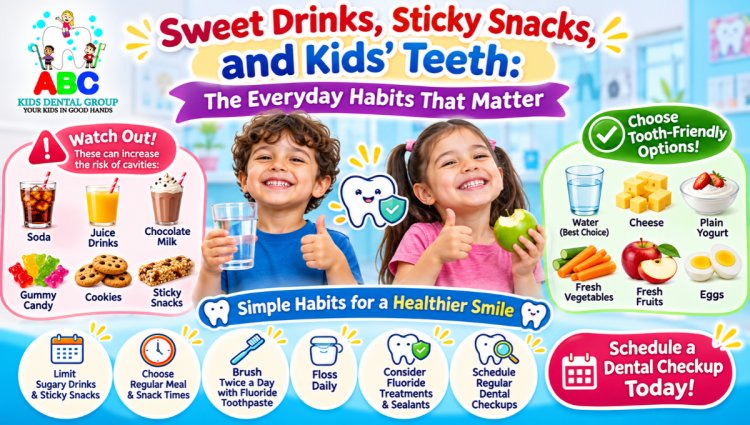
Some common drinks parents should watch include:
-
Soda and soft drinks.
-
Packaged fruit juices.
-
Sweetened iced tea.
-
Sports and energy drinks.
-
Chocolate and flavored milk.
-
Sweetened lemonade and fruit drinks.
Even beverages marketed as fruit drinks may contain added sugars. Reading nutrition labels can help parents understand what their children are consuming.
Why Is Frequent Sipping a Problem?
One important factor is not just how much sugar a child consumes, but how often their teeth are exposed to it.
For example, drinking a juice box with lunch is different from sipping a sugary drink throughout the afternoon. Frequent exposure gives teeth repeated opportunities to experience acid attacks.
A simple solution: Make plain water the preferred drink between meals and offer sweetened beverages less frequently.
According to the American Academy of Pediatric Dentistry (AAPD), fluoridated water is the preferred source of hydration for children and adolescents.
2. Sticky Snacks: Why They Can Be Hard on Little Teeth
Some snacks remain attached to tooth surfaces longer than others. Sticky foods can become trapped between teeth or inside the grooves of molars, making them difficult to remove.
Common examples include:
-
Gummy bears and fruit snacks.
-
Caramel and toffee.
-
Raisins and dried fruits.
-
Sticky granola bars.
-
Fruit roll-ups.
-
Chewy candies.
These foods may contain sugars that remain in contact with teeth for extended periods.
Even foods that seem healthy, such as dried fruit, can be sticky and contain concentrated natural sugars.
Are Crackers and Chips Also a Concern?
Yes. It is not only candy that can affect children's teeth.
Crackers, chips, pretzels, and other starchy snacks can break down into sugars in the mouth. Small pieces may also become trapped between teeth and in chewing surfaces.
Parents should encourage balanced snack choices and avoid allowing children to graze continuously throughout the day.
3. How Often Children Eat Matters More Than Parents Think
One of the biggest mistakes families make is allowing children to snack throughout the day without a regular eating schedule.
Every time children consume foods or drinks containing sugars or fermentable carbohydrates, bacteria can produce acids that affect tooth enamel.
When snacking happens frequently, teeth receive repeated acid exposure.
Consider these everyday examples:
-
A child slowly finishing a juice box over two hours.
-
Eating gummy snacks between every meal.
-
Frequently sipping sweetened milk.
-
Having cookies and candy throughout the afternoon.
-
Falling asleep with a bottle containing milk or juice.
These habits can increase cavity risk.
Build a Better Snacking Routine
Try creating regular meal and snack times rather than allowing continuous grazing.
Encourage children to eat balanced meals, enjoy snacks at planned times, and drink water between meals.
This gives saliva more opportunity to help neutralize acids and support the natural repair of tooth enamel.
4. What Are the Best Tooth-Friendly Snacks for Kids?
Healthy snacking can support both children's overall development and their oral health.
Instead of completely restricting snacks, introduce nutritious alternatives that are less likely to contribute to tooth decay.
Some parent-friendly options include:
Cheese: Cheese provides calcium and other nutrients that support healthy teeth.
Plain yogurt: Unsweetened yogurt offers calcium and protein without unnecessary added sugar.
Fresh vegetables: Cucumber, carrots, and other age-appropriate vegetables make nutritious snack choices.
Fresh whole fruits: Apples, pears, and other whole fruits can be part of a balanced diet.
Eggs: Eggs provide protein and important nutrients for growing children.
Nuts and seeds: These can be nutritious options for children who are developmentally ready, provided they are safe for their age and chewing ability.
Always choose snacks according to your child's age, allergies, and developmental needs.
The goal is to create balanced eating habits rather than making children feel that healthy food is a punishment.
5. Simple Ways to Reduce Sugar in Your Child's Daily Routine
You do not need to change your entire family's diet overnight. Small, consistent improvements can make healthy choices easier.
Here are some practical ideas:
Replace Sugary Drinks With Water
Keep a reusable water bottle available for school, outdoor activities, and playtime.
Encourage children to choose plain water between meals instead of juice or sweetened beverages.
Read Food Labels
Check ingredient lists and nutrition labels for added sugars. Ingredients such as corn syrup, sucrose, glucose, and fructose can indicate added sugar.
Save Sweets for Occasional Treats
Candy, cookies, cakes, and other sugary foods do not need to become everyday snacks.
Offer them occasionally rather than making them a regular part of your child's routine.
Avoid Sugary Drinks at Bedtime
Never put a child to bed with a bottle or sippy cup containing juice, soda, or other sugary beverages.
For young children, prolonged nighttime exposure to milk or formula can also increase the risk of early childhood tooth decay.
Plain water is the appropriate drink if a child needs a bedtime bottle or cup.
6. Brushing and Flossing: Your Child's Everyday Dental Defense
Healthy eating habits work best when combined with proper oral hygiene.
Parents should encourage children to develop consistent brushing and flossing routines from an early age.
Follow these simple guidelines:
-
Brush twice daily for two minutes with fluoride toothpaste.
-
Use a smear about the size of a grain of rice for children younger than three.
-
Use a pea-sized amount for children aged three and older.
-
Supervise brushing and help children clean all tooth surfaces.
-
Begin flossing when two teeth touch.
-
Replace toothbrushes when bristles become worn.
For children who enjoy sweet treats, rinsing with plain water afterward can help clear away some food particles and sugars.
Remember that baby teeth need protection too. They help children chew, speak, and maintain space for permanent teeth.
Parents can also explore professional teeth cleaning services for children at ABC Kids Dental Group.
7. How Pediatric Dentists Help Prevent Childhood Cavities
Even with good home care, children can develop cavities. Some areas of the mouth are difficult to clean, particularly the grooves on back teeth.
Routine dental examinations help identify potential problems before they become more serious.
A pediatric dentist may recommend:
Professional Dental Cleanings: Help remove plaque and buildup from areas that regular brushing may miss.
Fluoride Treatments: Help strengthen enamel and reduce the risk of tooth decay when appropriate.
Dental Sealants: Protective coatings placed on the chewing surfaces of molars to help prevent food and bacteria from collecting in deep grooves.
Oral Hygiene Guidance: Personalized instructions to help parents improve their children's brushing, flossing, and eating habits.
Learn more about pediatric fluoride treatments and preventive dental services or dental sealants for kids.
8. When Should You Schedule Your Child's Dental Checkup?
Parents should not wait until their child complains of a toothache before scheduling a dental visit.
Children should have their first dental appointment by their first birthday or within six months after their first tooth appears.
After that, many children benefit from routine dental checkups every six months, although the recommended frequency depends on individual oral health needs.
Watch for signs such as:
-
White, brown, or dark spots on teeth.
-
Tooth sensitivity.
-
Pain while eating or drinking.
-
Visible holes or discoloration.
-
Swollen or bleeding gums.
-
Persistent bad breath.
If you notice any of these symptoms, contact your child's dental office for an evaluation.
For families searching for a pediatric dentist in Granada Hills, a pediatric dentist in Pacoima, or a pediatric dentist in Sun Valley CA, ABC Kids Dental Group provides children's dental care through multiple San Fernando Valley locations.
The practice also serves families looking for a pediatric dentist in Reseda, a children's dentist in San Fernando CA, or a pediatric dentist near Mission Hills.
Parents exploring orthodontic care can also inquire about a kids orthodontist in Granada Hills or braces for kids in Pacoima.
Families searching for a children's dentist in North Hills CA or a kids dentist near Hansen Dam can explore the practice's nearby locations as well.
Visit the ABC Kids Dental Group locations page to find an office convenient for your family.
9. Make Healthy Dental Habits a Family Routine
Children learn by watching their parents. When the whole family follows healthy eating and oral hygiene habits, children are more likely to develop routines they can maintain as they grow.
Try these simple family activities:
-
Brush together every morning and evening.
-
Keep water easily accessible at home.
-
Prepare healthy snacks for school.
-
Make grocery shopping an opportunity to learn about food labels.
-
Limit sugary drinks during family outings.
-
Celebrate consistent brushing and flossing.
The goal is not perfection. It is helping children understand that everyday choices can protect their smiles.
Frequently Asked Questions
1. What drinks are best for children's teeth?
Plain water is the best everyday drink for children's teeth. Fluoridated tap water can provide additional protection against tooth decay. Plain milk is also a nutritious option when served appropriately.
2. Are fruit juices bad for children's teeth?
Fruit juice can contain natural sugars and expose teeth to acids. The American Academy of Pediatrics recommends no juice for children under 12 months. For older children, juice portions should be limited according to age.
3. Which snacks should parents limit to prevent cavities?
Limit frequent consumption of gummy candies, caramel, toffee, fruit roll-ups, sticky dried fruits, cookies, and sugary snack bars. These foods may stick to teeth or expose them to sugar.
4. How often should children visit a pediatric dentist?
Many children benefit from dental checkups every six months. However, children with a higher cavity risk may need more frequent visits based on their dentist's recommendations.
5. Can dental sealants help protect children's teeth?
Yes. Dental sealants are thin protective coatings applied to the chewing surfaces of back teeth. They help prevent food and bacteria from collecting in deep grooves, reducing the risk of cavities.
Give Your Child's Smile a Healthier Start With ABC Kids Dental Group!
Protecting children's teeth starts with everyday decisions. Choosing water instead of sugary drinks, limiting sticky snacks, planning regular meals, and encouraging consistent brushing can make a meaningful difference.
Remember, healthy smiles are built through small habits repeated every day.
At ABC Kids Dental Group, we are committed to helping children and families understand the importance of preventive dental care. From professional cleanings and fluoride treatments to dental sealants and routine examinations, our team helps families take steps toward healthier smiles.
Ready to protect your child's smile? Schedule a dental appointment with ABC Kids Dental Group today!
Contact ABC Kids Dental Group
Business Name: ABC Kids Dental Group
Main Phone: 833-422-2543
Website: https://abckidsdentalla.com/
Office Locations and Phone Numbers:
-
Granada Hills: 16850 San Fernando Mission Blvd., Granada Hills, CA 91344 | 818-488-6068
-
Pacoima: 10445 Laurel Canyon Blvd., Pacoima, CA 91331 | 818-890-8070
-
Sun Valley: 8361 Laurel Canyon Blvd., Sun Valley, CA 91352 | 818-504-9216
-
San Fernando: 2040 Glenoaks Blvd., Unit F, San Fernando, CA 91340 | 818-600-4690
-
Reseda: 18235 Sherman Way, Reseda, CA 91335 | 818-401-6777
Insurance: Denti-Cal and all PPO insurance plans accepted. Contact the office to verify individual coverage.
Language: Se Habla Español.
Book an Appointment: https://abckidsdentalla.com/appointment/
Healthy eating habits today can help build healthier smiles for tomorrow!
What's Your Reaction?