 Free Transportation
How to Prevent Cavities in Children: Simple Habits for a Healthy Smile
Learn how to prevent cavities in children with simple brushing, flossing, healthy eating, fluoride, sealants, and regular pediatric dental visits.
Every parent wants their child to grow up with strong teeth and a healthy smile. But cavities are one of the most common dental problems children face. The good news is that many childhood cavities can be prevented with consistent oral hygiene, healthy eating habits, fluoride protection, and regular dental visits.
Knowing how to prevent cavities in children starts with understanding that dental care should begin early. Baby teeth need just as much attention as permanent teeth because they help children chew, speak clearly, and maintain space for their developing adult teeth.
At ABC Kids Dental Group, preventive pediatric dentistry focuses on helping children develop healthy habits while giving parents the guidance they need to protect their children's smiles.
Quick Answer
The best way to prevent cavities in children is to combine good daily habits with professional preventive dental care.
Parents should:
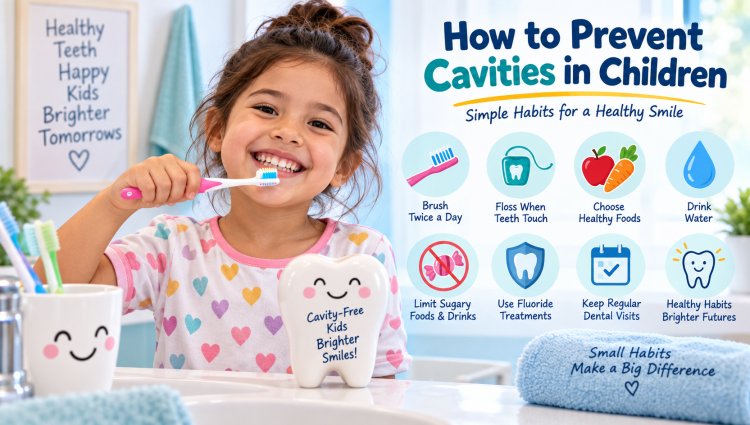
- Brush their child's teeth twice a day with fluoride toothpaste.
- Help or supervise brushing until the child can brush effectively.
- Floss between teeth that touch each other.
- Limit sugary foods and drinks.
- Encourage water throughout the day.
- Avoid frequent snacking on sugary foods.
- Schedule regular dental checkups and professional cleanings.
- Ask the dentist whether fluoride treatments or dental sealants are appropriate.
No single habit prevents every cavity. A consistent combination of home care and professional dental care provides the strongest protection.
What Causes Cavities in Children?
Cavities develop when bacteria in the mouth interact with sugars and carbohydrates from food and drinks. These bacteria produce acids that attack tooth enamel. Repeated acid attacks can weaken the enamel and eventually create a cavity.
Children may have a higher risk of cavities because they are still learning effective brushing and may frequently consume snacks, juice, sweetened drinks, or sticky foods.
Poor brushing, inadequate fluoride exposure, frequent sugar consumption, and missed dental checkups can all increase the risk of tooth decay.
Understanding these risk factors helps parents focus on prevention instead of waiting until a child develops tooth pain.
How Can Parents Prevent Cavities in Children?
Brush Twice a Day With Fluoride Toothpaste
Brushing is one of the most important ways to prevent cavities. Children should brush their teeth twice each day, especially before bedtime.
Use a soft-bristled, child-sized toothbrush and an age-appropriate amount of fluoride toothpaste. Younger children generally need an adult to help or supervise brushing because they may not yet have the coordination needed to clean every surface effectively.
Parents should make sure the front, back, and chewing surfaces of the teeth are cleaned gently.
Parents can also learn more about developing healthy brushing habits that last a lifetime through this helpful guide from ABC Kids Dental:
Healthy Brushing Habits That Last a Lifetime
Floss When Teeth Touch
A toothbrush cannot clean every area between teeth. Once two of your child's teeth begin touching, flossing becomes an important part of their routine.
Parents may need to floss for younger children or help them until they can manage the technique themselves.
Flossing removes food particles and plaque from areas that a toothbrush may miss, helping reduce the chance of cavities developing between teeth.
Limit Sugary Foods and Drinks
Sugar is an important factor in childhood tooth decay. Children do not necessarily need to avoid every sweet food, but parents should pay attention to how frequently sugary foods and drinks are consumed.
Try to limit:
- Candy and chocolate
- Sticky gummies and chewy sweets
- Cookies and pastries
- Soda and other sugary drinks
- Frequent fruit juice
- Sweetened snacks between meals
Instead, offer balanced snacks such as cheese, yogurt, vegetables, fresh fruit, nuts when age-appropriate, and other nutritious choices.
For more ideas, parents can explore ABC Kids Dental's guide to the best foods for strong teeth in children, which explains how nutrition can support children's oral health:
Best Foods for Strong Teeth in Children
Encourage Water Between Meals
Water is one of the simplest drinks for protecting children's teeth. It helps wash away food particles and keeps the mouth hydrated.
Encourage your child to choose water instead of sugary drinks, particularly between meals and snacks.
Making water the normal everyday drink can reduce repeated exposure to sugar and acids that may contribute to tooth decay.
Avoid Bedtime Bottles With Sugary Drinks
Parents of babies and toddlers should be particularly careful about what children drink before sleeping.
Allowing a child to fall asleep with a bottle containing milk, juice, or another sugary drink can expose the teeth to sugars for an extended period. This can contribute to early childhood tooth decay.
If your child needs a drink before bedtime, discuss appropriate options and feeding habits with your pediatric dentist.
Benefits of Professional Cavity Prevention
Home care is essential, but professional preventive dentistry provides another layer of protection.
Fluoride Treatments
Fluoride helps strengthen tooth enamel and makes teeth more resistant to acid attacks. Depending on your child's individual risk factors, a pediatric dentist may recommend professional fluoride treatment.
ABC Kids Dental provides pediatric fluoride treatments as part of its preventive services. Parents can learn more about fluoride treatments for children's teeth and their role in protecting developing smiles:
Fluoride Treatments for Children's Teeth
Dental Sealants
Back teeth contain grooves and pits where food particles and bacteria can become trapped. These areas can sometimes be difficult for children to clean thoroughly.
Dental sealants are thin protective coatings placed on the chewing surfaces of certain teeth. They can provide an additional barrier against cavity-causing bacteria and are commonly considered for children's molars when appropriate.
Regular Dental Exams and Cleanings
Regular dental appointments allow the dentist to identify early signs of tooth decay and provide professional cleaning when needed.
Routine visits can also help parents understand their child's specific cavity risk and receive personalized recommendations for brushing, diet, fluoride, and other preventive measures.
ABC Kids Dental provides children's oral examinations, professional cleanings, and dental sealants as part of its preventive pediatric dental care. Parents can learn more about these services here:
Children's Oral Exams, Cleanings & Dental Sealants
What to Expect From a Child's Cavity-Prevention Routine
Step 1: Create a Consistent Home Routine
Make brushing part of your child's morning and bedtime routine. Young children often respond well when parents brush with them or turn brushing into a fun family activity.
Consistency is more important than making the routine complicated. A simple daily schedule can help children understand that brushing and flossing are normal parts of taking care of themselves.
Step 2: Make Healthy Food Choices
Keep nutritious snacks available and limit how often children consume sugary foods and drinks. Encourage water as the primary drink between meals.
Parents should also pay attention to how often children snack throughout the day. Frequent exposure to sugary foods can increase the number of acid attacks on the teeth.
Step 3: Schedule Preventive Dental Visits
Do not wait until your child complains about tooth pain. Regular dental appointments can help identify problems early and provide professional preventive care.
Your child's dentist can recommend how often your child should visit based on their age, oral health, and individual cavity risk.
You can review the full range of pediatric dental services available at ABC Kids Dental to understand which preventive and restorative options may be appropriate for your child:
ABC Kids Dental Pediatric Dental Services
Cavity Prevention for Children in Los Angeles and the San Fernando Valley
Families throughout the Los Angeles and San Fernando Valley area can benefit from establishing preventive dental care close to home.
ABC Kids Dental Group provides pediatric dental services for families in communities including Granada Hills, Pacoima, Sun Valley, San Fernando, and Reseda.
Having a trusted pediatric dental office nearby can make it easier to maintain regular checkups, professional cleanings, fluoride treatments, and other preventive care as your child grows.
Parents looking for a convenient pediatric dental provider can visit the ABC Kids Dental Group home page to learn more about the practice and its locations:
Why Choose ABC Kids Dental Group?
Preventing cavities is about more than simply treating teeth when problems appear. It is about creating healthy habits and providing children with preventive care throughout their development.
ABC Kids Dental Group offers a range of pediatric services, including oral examinations, professional teeth cleanings, fluoride treatments, dental sealants, digital X-rays, restorative care, and other children's dental services.
The practice focuses on creating a comfortable, child-friendly experience while helping parents understand how to maintain good oral health at home.
A pediatric dental team can also monitor changes as your child grows and help identify potential concerns before they become more complicated.
Frequently Asked Questions
1. How can I prevent cavities in my child?
Start with twice-daily brushing using fluoride toothpaste, floss when teeth touch, limit sugary foods and drinks, encourage water, and maintain regular pediatric dental visits.
2. At what age should children start using fluoride toothpaste?
Children can generally benefit from fluoride toothpaste from the time their first tooth appears, but the amount should be appropriate for their age. Parents should follow their pediatric dentist's guidance regarding toothpaste quantity and brushing.
3. Are baby teeth really important if they eventually fall out?
Yes. Baby teeth help children chew and speak and maintain space for permanent teeth. Cavities in primary teeth can also cause pain and other dental complications, so they should be properly cared for.
4. Can dental sealants prevent cavities?
Dental sealants can help protect the chewing surfaces of certain teeth by creating a barrier over grooves and pits where food and bacteria can collect. Your child's dentist can determine whether sealants are appropriate.
5. How often should my child visit the dentist?
Many children benefit from routine dental visits approximately every six months, but the ideal schedule depends on your child's individual oral health and cavity risk. Your pediatric dentist can recommend the appropriate interval.
Conclusion: Start Preventing Cavities Early
Learning how to prevent cavities in children does not require complicated routines. Small habits practiced consistently can make a significant difference.
Brush twice a day, floss when teeth touch, choose nutritious foods, limit sugary drinks and snacks, encourage water, and maintain regular professional dental visits. Preventive treatments such as fluoride and dental sealants may provide additional protection when recommended by your child's dentist.
Most importantly, make dental care a normal part of your child's everyday routine. The habits children develop today can help support healthier smiles for years to come.
If your child is due for a dental checkup or you want personalized advice about cavity prevention, contact ABC Kids Dental Group to schedule a visit or learn more about available pediatric dental care:
What's Your Reaction?