 Free Transportation
Dental Crowns for Kids: When Are They Needed? | ABC Kids Dental
Discover when children need dental crowns, the types available, benefits, and what parents can expect. Learn about kids' dental care at ABC Kids Dental.
As parents, we always want our children to have healthy, happy smiles. However, children's teeth can sometimes develop cavities, become damaged due to accidents, or experience problems that require more than a regular dental filling. In these situations, a dental crown may be recommended to protect and restore the affected tooth.
But are dental crowns really necessary for children, especially when baby teeth eventually fall out? The answer is yes, in certain situations. Baby teeth play an important role in chewing, speaking, maintaining space for permanent teeth, and supporting healthy dental development.
At ABC Kids Dental Group, we believe parents should understand their child's dental treatment options before making decisions. Let's explore what dental crowns are, when children need them, and how they help protect growing smiles.
What Are Dental Crowns for Kids?
A dental crown is a protective covering placed over a damaged or weakened tooth. It covers the visible portion of the tooth, restoring its shape, strength, appearance, and function.
Unlike a regular filling, which repairs only a specific area, a crown covers most or all of the visible tooth structure.
Pediatric dental crowns are commonly recommended for children with extensive tooth decay, severely damaged teeth, or teeth that need additional protection following certain dental procedures.
For more information about treatment options, explore our children's dental services.
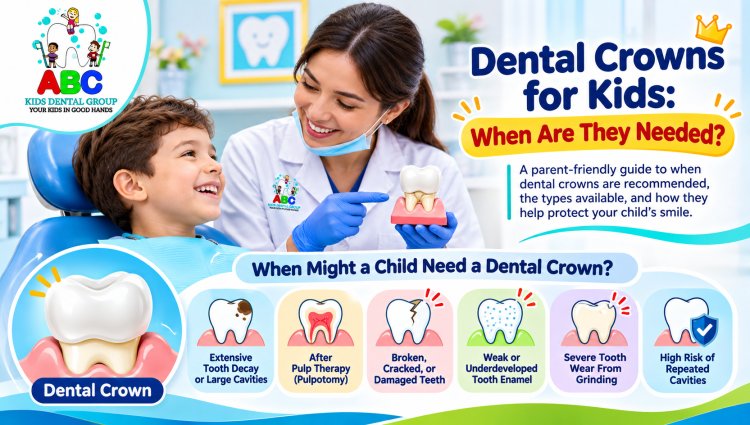
6 Situations When Your Child May Need a Dental Crown
Not every cavity or damaged tooth requires a crown. A pediatric dentist evaluates the condition of the tooth and recommends treatment based on its structure, location, and the child's dental development.
Here are six common situations when a dental crown may be necessary.
1. Extensive Tooth Decay or Large Cavities
Children can develop cavities when bacteria in the mouth break down tooth enamel. If decay becomes extensive or affects multiple surfaces of a tooth, a regular filling may not provide enough strength or protection.
In these cases, a dental crown may help restore the tooth and reduce the risk of further damage.
2. After Pulp Therapy or a Pulpotomy
Sometimes, tooth decay reaches the inner pulp of a baby tooth, where nerves and blood vessels are located. A pediatric dentist may recommend pulp therapy to treat the affected tissue and preserve the tooth.
After certain pulp treatments, a crown may be recommended to provide full coverage and protect the remaining tooth structure.
3. Broken, Cracked, or Damaged Teeth
Children are active, and accidents can happen during sports, playground activities, or everyday play.
A fall or accidental impact may crack or break a tooth. If the damage is extensive, a dental crown may help restore its structure and chewing function.
A dentist should evaluate dental injuries promptly to determine the appropriate treatment. If your child has a dental injury or sudden toothache, learn more about our emergency dental care for children.
4. Weak or Underdeveloped Tooth Enamel
Some children are born with developmental dental conditions that affect enamel formation. These conditions can leave teeth weaker, more sensitive, or more vulnerable to cavities and fractures.
A dental crown may provide additional protection when the tooth structure is significantly affected.
5. Severe Tooth Wear From Grinding
Some children grind or clench their teeth, especially during sleep. Occasional grinding is not always a cause for concern, but excessive tooth wear can damage the enamel and expose sensitive areas.
If the damage is significant, a pediatric dentist may recommend restorative treatment, including a crown, depending on the condition of the tooth.
6. High Risk of Repeated Cavities
Children who develop cavities frequently may need stronger, longer-lasting restorations.
For certain high-risk children with large or multiple-surface cavities in baby molars, stainless steel crowns may offer more durable coverage than fillings.
The dentist will consider the child's oral health, cavity risk, and ability to maintain follow-up visits before recommending treatment.
What Are the Different Types of Dental Crowns for Children?
Parents often wonder whether dental crowns for children are always silver-colored. Fortunately, different crown materials are available depending on the tooth's location, condition, and cosmetic requirements.
1. Stainless Steel Crowns
Stainless steel crowns are commonly used for children's back teeth. They are durable, provide full coverage, and are frequently recommended for baby molars with extensive decay or after pulp therapy.
Their metallic appearance makes them more noticeable, but they are a practical option for restoring teeth that need additional strength.
2. Tooth-Colored Zirconia Crowns
Zirconia crowns are designed to resemble natural teeth. They are often considered when appearance is an important factor, particularly for visible teeth.
They can provide a natural-looking restoration, although placement may require more tooth preparation than some other crown options.
3. Other Tooth-Colored Crown Options
Depending on the child's tooth and treatment needs, a dentist may discuss other aesthetic restoration options, including resin-based crowns.
The best material depends on the amount of remaining tooth structure, the location of the tooth, durability requirements, and the child's individual needs.
Are Dental Crowns Necessary for Baby Teeth?
One of the most common questions parents ask is why they should invest in treating baby teeth when permanent teeth will eventually replace them.
Baby teeth are important because they:
-
Help children chew food comfortably.
-
Support proper speech development.
-
Maintain space for incoming permanent teeth.
-
Contribute to healthy jaw and dental development.
-
Support a child's confidence when smiling and speaking.
Losing a baby tooth too early because of untreated decay or damage can sometimes affect the spacing of developing permanent teeth.
A dental crown may help preserve a baby tooth until it is naturally ready to fall out. However, crowns are not appropriate for every baby tooth. The dentist must consider how close the tooth is to its natural shedding time.
What Happens During a Dental Crown Procedure?
Understanding the procedure can help parents feel more comfortable when their child needs a crown.
Although the exact process depends on the tooth and crown material, treatment generally involves the following steps:
Step 1: Dental Examination
The pediatric dentist examines the affected tooth and may recommend dental X-rays to assess the extent of decay or damage.
Step 2: Preparing the Tooth
The dentist removes damaged or decayed tooth structure and prepares the tooth for the crown.
Step 3: Crown Placement
The selected crown is carefully fitted and secured over the prepared tooth using dental cement.
Step 4: Checking the Bite
The dentist checks the crown's fit and makes sure the child can close their teeth comfortably.
Children's dental treatment is approached with attention to their comfort, age, and individual needs.
How Can Parents Care for Their Child's Dental Crown?
A dental crown still requires proper oral hygiene and regular dental checkups.
Here are some helpful tips:
-
Encourage brushing twice daily with fluoride toothpaste appropriate for your child's age.
-
Help younger children brush properly.
-
Encourage daily flossing between teeth.
-
Limit sugary snacks, candies, and sweetened beverages.
-
Avoid chewing very hard objects that could damage dental restorations.
-
Schedule regular dental examinations.
-
Contact the dentist if the crown becomes loose, damaged, or uncomfortable.
Good daily habits can help protect both restored and natural teeth.
You can also explore our frequently asked questions about children's dental care for additional information about maintaining your child's oral health.
Frequently Asked Questions About Dental Crowns for Kids
1. At what age can children get dental crowns?
There is no single minimum age for dental crowns. A pediatric dentist may recommend one whenever a child's tooth needs additional protection or restoration, depending on the condition of the tooth.
2. Do dental crowns hurt for children?
The procedure is performed using appropriate pain-management techniques, including local anesthesia when needed. Some children may experience temporary sensitivity or mild discomfort afterward.
3. How long do dental crowns last on baby teeth?
A crown on a baby tooth is generally intended to protect the tooth until it naturally falls out. Its longevity depends on the crown material, oral hygiene, dental condition, and other individual factors.
4. Are stainless steel crowns safe for children?
Stainless steel crowns are an established treatment option in pediatric dentistry. However, the dentist should review the child's medical and allergy history before selecting the material.
5. Can a child eat normally after getting a dental crown?
Most children can gradually return to their normal eating habits after treatment, according to their dentist's instructions. Avoiding very hard or sticky foods may help protect the restoration.
Give Your Child a Healthy Smile With ABC Kids Dental Group
Every child's smile deserves proper attention and care. Whether your child has a large cavity, a damaged tooth, or weakened enamel, an early dental examination can help identify the right treatment.
At ABC Kids Dental Group, we are committed to helping children maintain healthy smiles through age-appropriate dental care in a welcoming environment.
Families looking for a pediatric dentist Granada Hills, pediatric dentist Pacoima, pediatric dentist Sun Valley CA, or pediatric dentist Reseda can explore our convenient office locations.
We also welcome families searching for a children's dentist San Fernando CA, kids orthodontist Granada Hills, braces for kids Pacoima, pediatric dentist near Mission Hills, children's dentist North Hills CA, and kids dentist near Hansen Dam.
Whether your child needs preventive care, restorative dentistry, or an orthodontic consultation, our team is here to help families understand their dental care options.
Schedule your child's dental visit today!
Visit our appointment scheduling page or contact our dental team to discuss your child's dental needs.
Contact ABC Kids Dental Group
Company Name: ABC Kids Dental Group
Main Phone: 833-422-2543
Office Locations:
-
Granada Hills: 16850 San Fernando Mission Blvd., Granada Hills, CA 91344 | 818-488-6068
-
Pacoima: 10445 Laurel Canyon Blvd., Pacoima, CA 91331 | 818-890-8070
-
Sun Valley: 8361 Laurel Canyon Blvd., Sun Valley, CA 91352 | 818-504-9216
-
San Fernando: 2040 Glenoaks Blvd., Unit F, San Fernando, CA 91340 | 818-600-4690
-
Reseda: 18235 Sherman Way, Reseda, CA 91335 | 818-401-6777
Website: www.abckidsdentalla.com
What's Your Reaction?